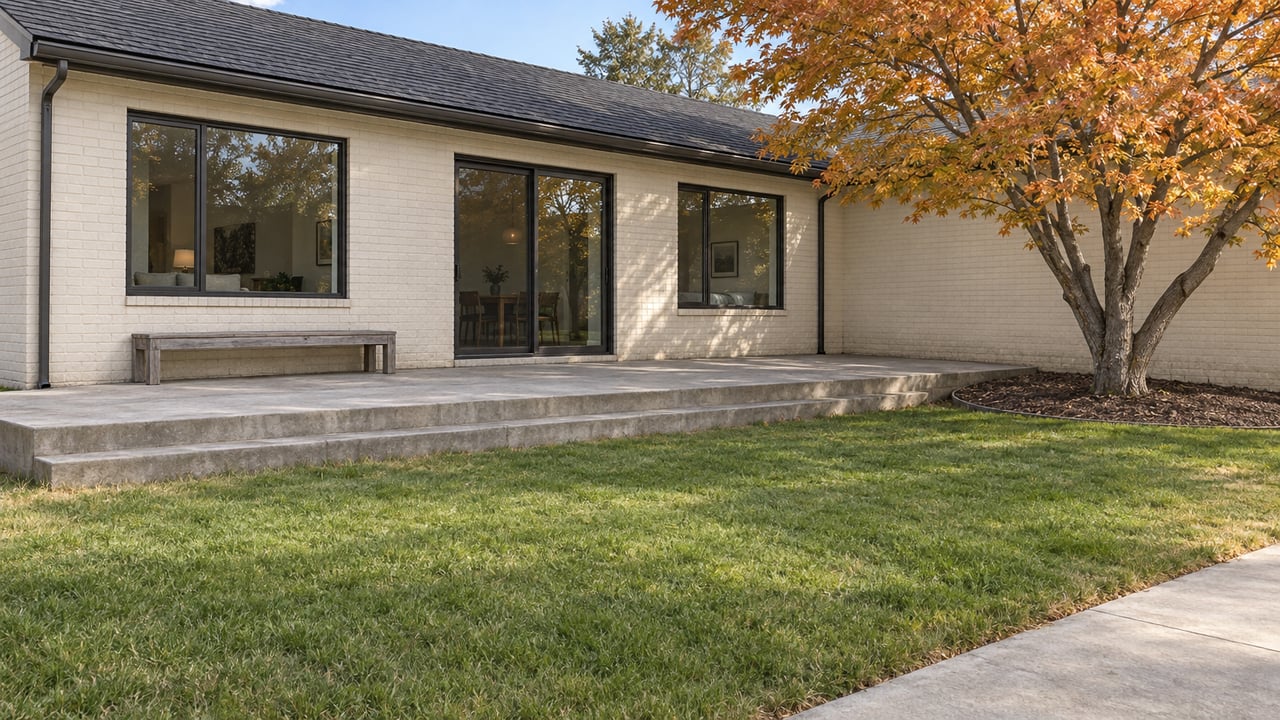
Say you're looking at a Lakewood ranch with a deep backyard and wondering what that yard could hold. You could find three answers. A city handout still on Lakewood's website says an accessory dwelling unit needs a 9,000-square-foot lot, an owner living on site, and no more than 700 square feet and one bedroom. The city's zoning ordinance, adopted June 10, 2024, allows up to 1,400 square feet and drops the lot minimum. A state law passed that same year overrides parts of both.
Those three documents matter more now than they did a year ago. In April 2026, Lakewood voters threw out the zoning code that would have allowed duplexes and triplexes in most residential areas. On most of the city's house lots, the ADU is now the only by-right way to add a second home. The rules setting that option's floor come from the Colorado statehouse, not from the handout most people find first.
What the April vote took away, and what it left
On April 7, 2026, Lakewood held a special election on four ballot measures, each covering part of the 400-page code the City Council approved in 2025. The Colorado Sun, republishing Denverite's election-night report, reported that the repeal side had about 65% of the vote as of 10 p.m. At 8 p.m. the count stood at roughly 14,900 votes to 8,100 on each measure.
The repealed code would have replaced single-family-only areas with categories such as "low-form residential" and "mid-form residential," allowing more than one unit per property. In low-form areas it capped buildings at three floors and 5,000 square feet. With that code gone, the previous rules came back, and under them single-family homes and accessory dwelling units are the only housing allowed in most residential areas.
The vote didn't bring back Lakewood's old growth cap. The 1% annual limit on new housing that voters approved in 2019 got an expiration date in 2023, when the council voted 8-3 to sunset it within two years so the city would comply with state law. So no numerical permit ceiling stands between a homeowner and an ADU application. What limits new housing now is zoning.
Why the ADU survived the repeal
The ADU rules buyers run into today don't come from the 2025 package. Lakewood adopted a separate ordinance, O-2024-12, that amended the ADU section of its zoning code before the citywide rewrite happened. Nothing in the sources reviewed for this post shows that the April vote reached back and undid that 2024 change. The city's published zoning ordinance, dated June 10, 2024, still carries the newer standards.
State law sits on top of that. Under Colorado's HB24-1152, as the Colorado Division of Local Government summarizes it, covered jurisdictions had until June 30, 2025, to allow one ADU wherever single-unit detached homes are allowed. The ADU can be internal, attached, or detached, and it gets an administrative review with no public hearing. The requirement applies in standard zone districts and planned unit developments alike, and it applies even where an HOA's covenants or bylaws prohibit ADUs. DOLA lists Lakewood as a subject jurisdiction.
Three rule sets, side by side
Here's how the city handout, the city code, and the state baseline line up on the points a buyer is most likely to ask about. Where the city code is stricter than state law, the state's limits on local rules govern.
| Question | 2017 city handout | 2024 Lakewood zoning code | State baseline under HB24-1152 |
|---|---|---|---|
| Minimum lot size | 9,000 sq ft | No ADU-specific minimum | No larger lot than the main home requires |
| Owner occupancy | Required | Permit issued to "owner occupant or their designee" | Ongoing owner-occupancy rules barred, with limited exceptions |
| Size cap | 700 sq ft, one bedroom | 1,400 sq ft gross floor area | Must allow 500 to 750 sq ft; may cap at the main home's size |
| Parking | Additional parking listed | Required if street parking is "legally or practically unavailable" | New space generally can't be required; an existing space can be designated |
| Number per lot | One | One | At least one; cities may allow more |
The city code adds a few standards of its own. A detached ADU can be up to 30 feet tall. It can't sit in front of the main house. Its exterior has to resemble the primary home in materials, color, roof pitch, and detailing. An ADU over a garage or on a second floor can use a separate outside stairway. On setbacks, the ADU follows the primary structure's dimensional standards for the zone district. State law limits how strict side and rear setbacks can be.
The parking clause in the city code is specific, which helps when you're touring. It treats street parking as unavailable if the property is on an arterial or collector street, if the street on that block is less than 28 feet wide, or if signs in front of the property prohibit parking. Under the state baseline, a jurisdiction can ask that an existing space on the lot be designated for the ADU, but it generally can't require a new one.
Why the lot matters more in today's Jefferson County market
The detached homes that carry this ADU option are the tighter part of the local market. The Colorado Association of Realtors doesn't publish a separate Lakewood report, so Jefferson County is the closest available measure. In August 2026, the CAR Jefferson County market update showed 1,486 single-family detached homes for sale, down 17.8% from August 2025, with 2.9 months of supply. The detached median sales price was $709,900, down 1.5% year over year, and homes sold in a median 35 days.
Townhomes and condos in the county went the other way that month. Inventory rose 1.9% to 737 homes, months of supply jumped 20% to 5.4, and median days on market rose 22.4% to 60, while the median price held flat at $385,000.
The Denver Metro Association of Realtors' September 2026 report, published October 3, shows the same split across the metro. Attached listings were up 9.77% year over year, compared with 1.06% for detached. Attached homes had 7.21 months of inventory, against 4.76 for the metro overall.
Detached homes in Jefferson County are getting scarcer, and in most of Lakewood a detached home's lot can now add a second unit in only one way. Two houses at similar prices can offer very different futures depending on the shape of the yard, the width of the street out front, and how much space a detached ADU would have behind the main house. Of those, only the price shows up in the median.
What Lakewood has said it will look at next
The rules could change again, but the city hasn't set a date. A week and a half after the election, Mayor Wendi Strom told The Denver Post she was still committed to changing the code, likely through a more incremental approach, and offered no timeline. Denverite reported that Councilmember Roger Low called the passed code "dead" and said the city needed more community conversations.
The most concrete signal so far is the 2027 work plan in the city's proposed budget. It lists zoning amendments on these topics:
- Accessory dwelling units
- Commercial corridors and adaptive reuse
- Parkland protection and tree preservation
- Compliance with state land use and zoning laws
- A residential district opt-in process
- Evaluating caps on single-family home size
The same plan calls for starting a planning process for city-owned properties at 8745 and 8755 W. 14th Ave. to support future housing. None of these items has an adoption date.
State deadlines add pressure. DOLA lists Lakewood among the communities covered by HB24-1313, the transit-oriented communities law. The final housing opportunity goal report is due December 31, 2026, and the goal itself must be met by December 31, 2027. As of an April 1 snapshot taken before the vote, Lakewood wasn't on the state's list of 18 jurisdictions out of compliance with one or more housing laws. State Rep. Rebekah Stewart has said the city is out of compliance; Strom disagreed and said narrower code changes could address it, as The Denver Post reported. The sources reviewed here show no state finding against Lakewood since the repeal.
Questions to bring to a showing
These questions don't settle whether a particular lot can take an ADU. That's for Lakewood's planning staff to decide, and permits are filed through the city's eTRAKiT system. They will tell you which listings are worth that phone call:
- Is there room behind the house? A city ADU can't sit in front of the primary dwelling.
- Is the street an arterial or collector, narrower than 28 feet, or signed for no parking? Under the city's code, any of these can trigger a parking requirement.
- How big is the main home? State law lets a city cap an ADU at the size of the primary dwelling.
- Do HOA covenants mention ADUs? State law applies regardless of an HOA prohibition. Short-term rentals are a separate matter.
- Is short-term rental income part of the plan? Lakewood's STR license requires proof of each owner's primary residence, HOA documents showing STRs aren't prohibited, and renewal every year.
Quick answers
Did the April 2026 vote ban ADUs in Lakewood? No. The restored rules allow single-family homes and ADUs in most residential areas. Duplexes and triplexes are what went away.
Can an ADU be rented long-term without the owner living on site? State law generally bars cities from requiring ongoing owner occupancy, with limited exceptions, though Lakewood's code text still includes an owner-occupant permit clause. Confirm how the city applies it today with planning staff.
Is the 2017 handout still valid? It's still posted, but its lot minimum, owner-occupancy rule, and 700-square-foot cap conflict with the 2024 code, state law, or both.
If a Lakewood listing has the kind of lot where an ADU might fit, Nicole Savoie can help you put the right questions to city planning staff before you write an offer, so the yard's potential is something you've checked, not assumed. Let's Connect.
This article is general information, not legal, tax or financial advice. Consult a qualified professional about your situation.